C++11多线程编程
C++11 Thread线程库的基本用法
进程:运行中的程序,线程:进程中的进程
一个操作系统可以有多个进程,一个进程中可以有多个线程,线程的最大数量取决于电脑CPU的核数
导入头文件thread
- 创建线程
thread th(function, arg)
创建线程需要绑定一个函数,function表示已经定义的函数名,通过arg可以传入函数的参数,线程在std标准库当中
创建线程对函数加引用&和不加引用的区别
当线程需要执行的函数中需要使用引用传递参数时,在主线程中传入变量值,程序将无法通过编译,需要使用std::ref来确保引用传递
1
2
3
4
5
6
7
8
9
10
11
12
13
| void threadFunction(int &x) {
}
int main() {
int x = 0;
std::thread t(threadFunction, std::ref(x));
t.join();
return 0;
}
|
join:调用此接口,当前线程会一直阻塞,直到目标线程完成,如果目标线程十分耗时,主线程会一直阻塞。让主线程等待其他线程结束以后才结束。
detach:让目标线程称为守护线程(daemon threads)。一旦detach之后,目标线程将独立执行,即便其对应的thread对象销毁也不影响线程的执行,并且,无法再与其通信
可以通过joinable()接口查询是否可以对接口进行join和detach
互斥量解决多线程数据共享问题
当一个资源需要被多个线程进行使用并修改的时候,就会存在资源的冲突
下面的函数线程t和t2都需要对变量a进行1000000次的自增操作,因为线程的并行操作,所以两个线程在进行取a的值的时候,有可能获取到同样的值,再次写回时,原本需要+2最终只完成了+1,或者运行较快的线程的写入值会被运行较慢的线程覆盖,这就导致了结果会小于原来预期的值
1
2
3
4
5
6
7
8
9
10
11
12
13
14
15
16
17
18
19
20
21
22
23
| #include <thread>
#include <iostream>
void thread_function(int& a){
for (size_t i = 0; i < 1000000; i++)
{
a += 1;
}
}
int main(){
int a = 0;
std::thread t(thread_function, std::ref(a));
std::thread t2(thread_function, std::ref(a));
t.join();
t2.join();
std::cout<<a<<std::endl;
}
|
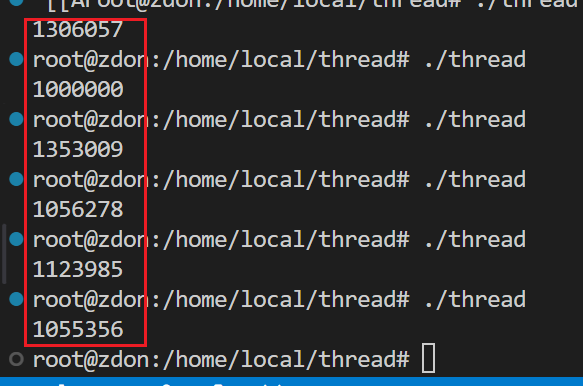
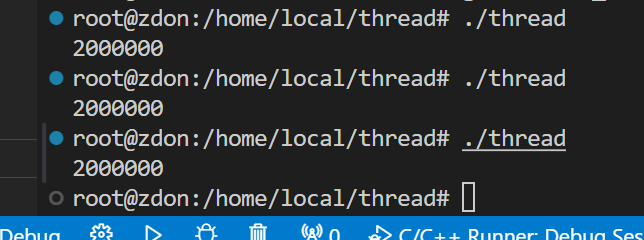
这个情况就需要两个线程对a进行互斥使用,用到mutex
在需要对资源a进行访问的前后,分别进行加锁和解锁,确保这一段临界区只由一个线程访问
1
2
3
4
5
6
7
8
9
10
11
12
13
14
15
16
17
18
19
20
21
22
23
24
25
26
27
28
29
30
| #include <thread>
#include <iostream>
#include <mutex>
std::mutex m;
void thread_function(int& a){
for (size_t i = 0; i < 1000000; i++)
{
m.lock();
a += 1;
m.unlock();
}
}
int main(){
int a = 0;
std::thread t(thread_function, std::ref(a));
std::thread t2(thread_function, std::ref(a));
t.join();
t2.join();
std::cout<<a<<std::endl;
}
|
lock_guard与unique_lock
lock_guard是一种互斥量封装类,用于保护共享数据,防止多个线程同时访问统一资源而导致数据竞争问题
当构造函数被调用时,该互斥量会被自动锁定
当析构函数被调用时,该互斥量会自动解锁
该对象不能复制或移动,只能在局部作用域中使用
使用到的就是RAII思想
1
2
3
4
5
6
7
8
9
10
11
12
| std::mutex m;
void thread_function(int& a){
for (size_t i = 0; i < 1000000; i++)
{
std::lock_guard<std::mutex> lg(m);
a += 1;
}
}
|
- unique_lock,构造函数会自动加锁,传入
std::defer_lock后会延迟加锁
unique_lock是一个互斥量封装类,用于在多线程中对互斥量进行加锁和解锁操作,特点是,可以对互斥量进行更加灵活的管理,包括延迟加锁、条件变量、超时等
lock():尝试对互斥量进行加锁,如果当前互斥量被其他线程持有则会阻塞
try_lock()L:尝试对互斥量进行加锁,如果被占有则返回false
try_lock_for(const std::chrono::duration<Rep, Period>& rel_time):尝试加锁,如果被占有,则超时以后会释放
std::call_once使用场景
单例设计模式是一种常见的设计模式,用于确保某个类只能创建一个实例,由于单例实例是全局唯一的,因此在多线程环境中使用单例模式时,需要考虑线程安全的问题
1
2
3
4
5
6
7
8
9
10
11
12
13
14
15
16
17
18
19
20
|
class Log{
private:
Log() {};
public:
Log(const Log& log) = delete;
Log& operator=(const Log& log) = delete;
static Log& GetInstance(){
static Log * log = nullptr;
if(!log){
log = new Log();
}
return log;
}
void PrintLog(std::string msg){
std::cout << msg << std::endl;
}
}
|
在多线程的情况下,如果都需要使用到同一个单例,当多个线程同时获取log时,如果此时log都为空,单例就会被多次初始化,违背了单例模式的设计初衷
call_once可以确保某个函数指挥被调用一次
call_once只能在线程中使用
1
2
3
|
template<class Callable, class... Args>
void call_once(std::once_flag&flag, Callable&& func, Args&&...args);
|
对单例模式的修改
1
2
3
4
5
6
7
8
9
10
11
12
13
14
15
16
17
18
19
20
21
22
23
24
25
26
27
28
|
class Log{
private:
Log() {};
public:
static std::once_flag once;
Log(const Log& log) = delete;
Log& operator=(const Log& log) = delete;
static Log& GetInstance(){
static Log * log = nullptr;
std::call_once(once, init);
return log;
}
static void init(){
if(!log){
log = new Log();
}
}
void PrintLog(std::string msg){
std::cout << msg << std::endl;
}
}
|
condition_variable使用场景
使用步骤如下
创建一个std::condition_variable对象
创建一个互斥锁std::mutex,用来保护共享资源的访问
在需要等待条件变量的地方
使用std::unique_lock< std::mutex >对象锁定互斥锁并调用std::condition_variable::wait_for()或std::condition_variable::wait_until()函数等待条件变量
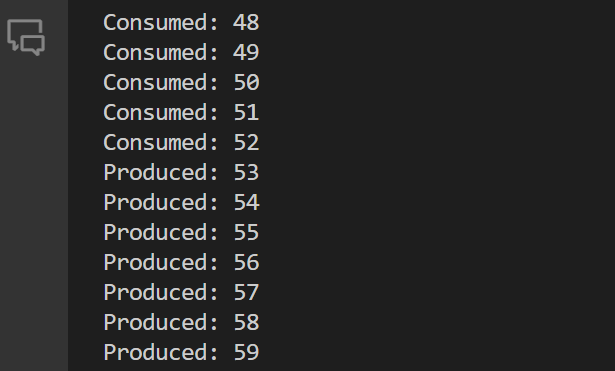
在其他线程中需要通知等待的线程时,调用std::condition_variable::notify_one()或者std::condition_variable::notify_all()函数通知等待的线程
生产者消费者模型
1
2
3
4
5
6
7
8
9
10
11
12
13
14
15
16
17
18
19
20
21
22
23
24
25
26
27
28
29
30
31
32
33
34
35
36
37
38
39
40
41
| #include <string>
#include <mutex>
#include <queue>
#include <thread>
#include <iostream>
#include <condition_variable>
std::queue<int> q;
std::condition_variable cv;
std::mutex m;
void Producer(){
for (size_t i = 0; i < 100; i++)
{
std::unique_lock<std::mutex> ul(m);
q.push(i);
cv.notify_one();
std::cout<<"Produced: "<<i<<std::endl;
std::this_thread::sleep_for(std::chrono::microseconds(10000));
}
}
void Consumer(){
while(1)
{
std::unique_lock<std::mutex> ul(m);
cv.wait(ul, []{return !q.empty();});
std::cout<<"Consumed: "<<q.front()<<std::endl;
q.pop();
}
}
int main(){
std::thread t1(Producer);
std::thread t2(Consumer);
t1.join();
t2.join();
return 0;
}
|
线程池的实现
维护一个线程数组:可以初始化线程的个数
维护一个任务队列:当前正在进行的任务
线程数组负责从队列取任务,生产者负责从任务队列里加任务(需要提供加任务的接口)
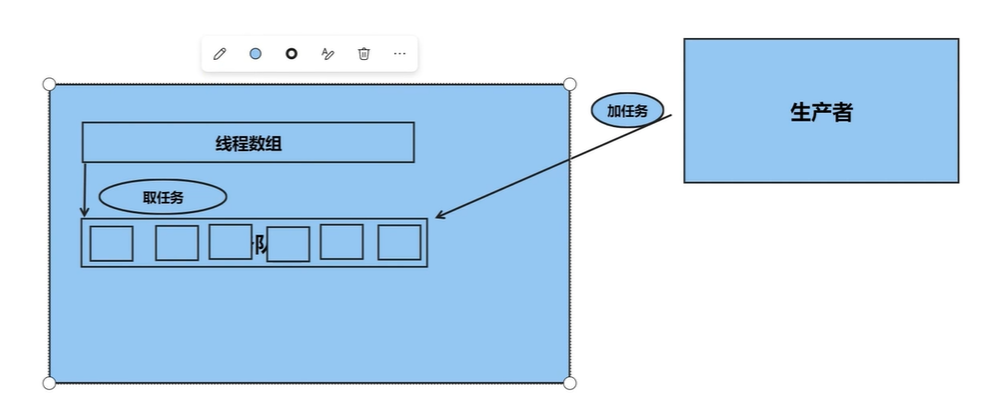
构造函数中指定起始线程的个数,初始化线程,每一个线程都在循环的在任务队列里取任务并完成,给用户提供一个接口,不断的往任务队列中添加任务,并且每次添加任务过后会通知一个维护的线程去完成任务
每一次访问tasks和stop变量的时候,这是临界区,都需要进行加锁
1
2
3
4
5
6
7
8
9
10
11
12
13
14
15
16
17
18
19
20
21
22
23
24
25
26
27
28
29
30
31
32
33
34
35
36
37
38
39
40
41
42
43
44
45
46
47
48
49
50
51
52
53
54
55
56
57
58
59
60
61
62
63
64
65
66
67
68
69
70
71
72
73
74
75
76
77
78
79
80
81
82
83
84
85
86
| #include <mutex>
#include <queue>
#include <thread>
#include <iostream>
#include <functional>
#include <condition_variable>
class ThreadPool
{
private:
std::vector<std::thread> threads;
std::queue<std::function<void()>> tasks;
std::condition_variable cv;
std::mutex m;
bool stop;
public:
ThreadPool(int n) : stop(false){
for( int i = 0; i < n; ++i ){
threads.emplace_back([this]{
while(true){
std::unique_lock<std::mutex> ul(m);
cv.wait(ul, [this]{
return stop || !tasks.empty();
});
if( stop && tasks.empty() ){
return;
}
std::function<void()> task(std::move(tasks.front()));
tasks.pop();
ul.unlock();
task();
}
});
}
}
~ThreadPool(){
{
std::unique_lock<std::mutex> ul(m);
stop = true;
}
cv.notify_all();
for( auto& t : threads ){
t.join();
}
}
template<class F, class... Args>
void enqueue(F&& f, Args&&... args){
std::function<void()> task = std::bind(std::forward<F>(f), std::forward<Args>(args)...);
{
std::unique_lock<std::mutex> ul(m);
tasks.emplace(std::move(task));
}
cv.notify_one();
}
};
int main(){
ThreadPool tp(4);
for( int i = 0; i < 8; ++i ){
tp.enqueue([i]{
printf("Thread %d is working\n", i);
std::this_thread::sleep_for(std::chrono::seconds(1));
printf("Thread %d is done\n", i);
});
}
return 0;
}
|
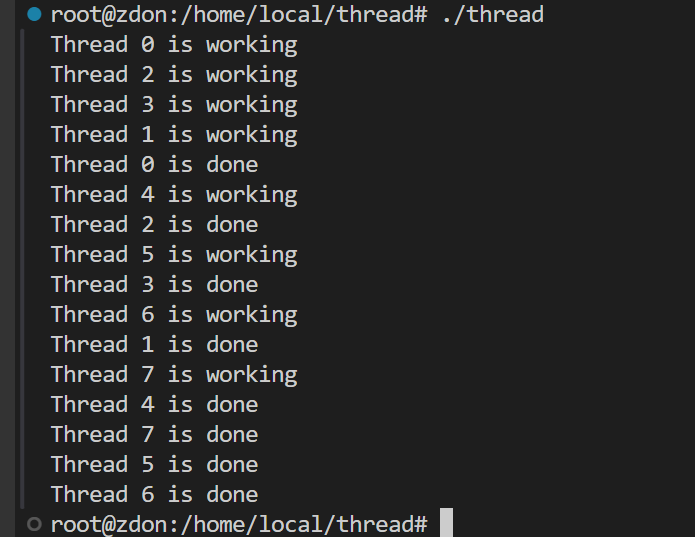
cout的单个输出是线程安全的,这种线程安全是针对在操作系统层面,即每一次<<的调用都是原子的,但是多个<<进行串联输出的时候,整个表达式并不是原子的,因此在串联输出的过程中,会被其他输出线程打断
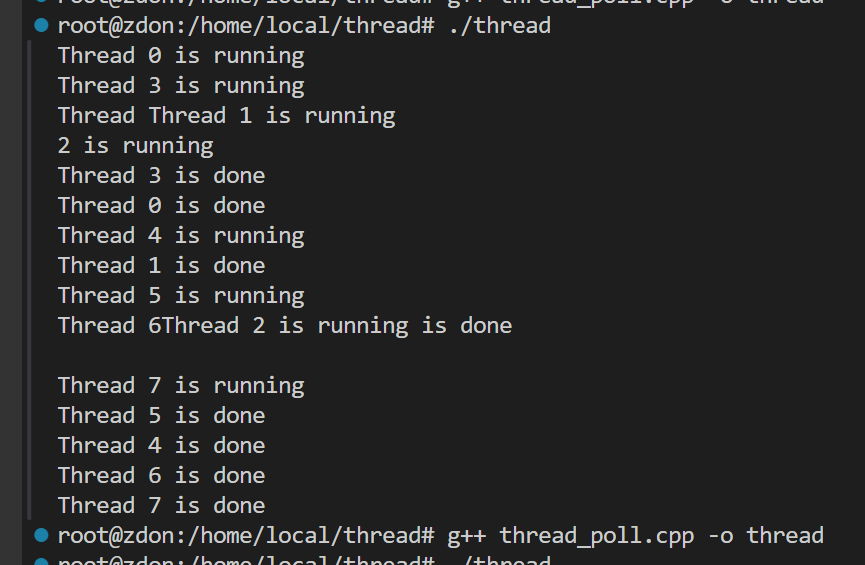
printf(“Thread %d is working\n”, i);
使用printf输出则是将串联的输出转化为单一的输出,因此单条语句不会产生混乱,但是多个线程输出还是会产生混乱。